Qualified professionals with 50 years experience Contact Now



Call us on
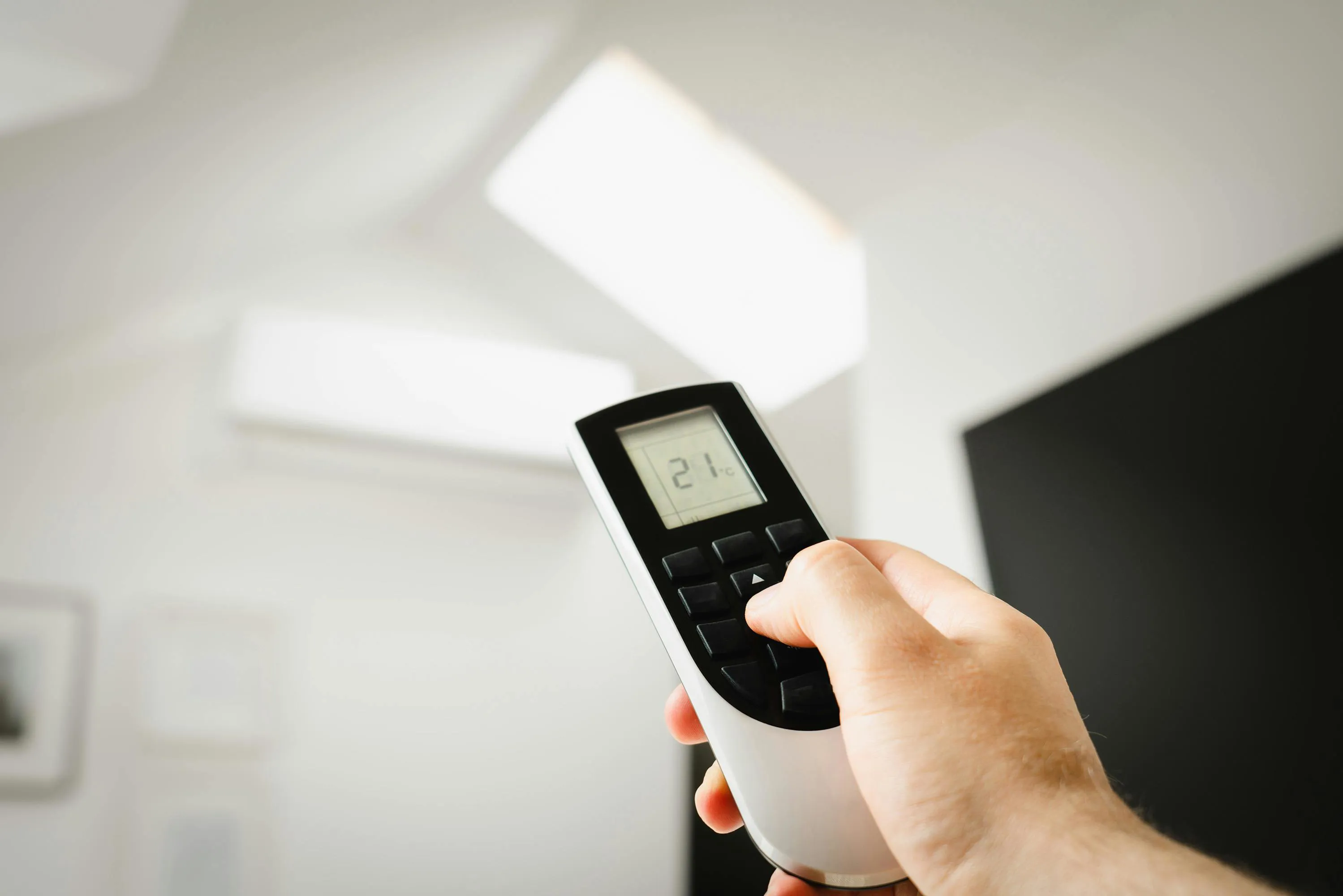
Home air conditioning is becoming a practical option for homeowners who want better control over the comfort of specific rooms. It is not just for offices, shops or homes abroad. In many UK homes, fixed air conditioning can help with bedrooms that become too warm at night, loft conversions that overheat, home offices that are uncomfortable to work in, or garden rooms that need independent heating and cooling.
Most domestic air conditioning enquiries are not about cooling an entire house. They are usually about solving a particular comfort problem in one or two rooms.
This guide explains what to consider before installing home air conditioning, including suitability, system types, planning, installation cost, running costs, noise, disruption, servicing and how to choose the right installer.
To read about the reasons behind why air conditioning in our homes is rising in popularity, see Are UK Summers Getting Hotter?

Home air conditioning may be worth considering if:
The best option depends on the room size, insulation, glazing, layout, preferred unit position, outdoor unit location and how you plan to use the space. A survey is the best way to find out whether air conditioning is suitable and what type of system would work.
Domestic air conditioning is a fixed system designed to cool, and in many cases heat, one or more rooms in your home.
Most systems include an indoor unit and an outdoor unit. In cooling mode, the system removes heat from the room and transfers it outside. In heating mode, many systems can reverse the process and provide warmth to the room.
These are often called air-to-air systems. They heat or cool the air in a room rather than heating water for taps, showers or radiators. For most homes, this means air conditioning complements the existing central heating system rather than replacing it completely.
A single room may only need one indoor unit. Several rooms may need a multi-split system, where more than one indoor unit connects to an outdoor unit. Larger or more discreet installations may need a more detailed design.
The best rooms for home air conditioning are usually the spaces where temperature is hardest to control.
| Room | Why air conditioning can help | What needs checking |
|---|---|---|
| Bedroom | Helps make sleeping more comfortable during warm weather | Noise level, unit position, airflow and outdoor unit location |
| Loft conversion | Helps control rooms that often overheat because they sit at the top of the property | Insulation, room size, pipe routes and available wall space |
| Home office | Helps keep the room comfortable for working, especially during hot weather | Glazing, daily use, heating needs and unit position |
| Garden room or studio | Can provide independent heating and cooling away from the main house | Electrical supply, outdoor unit position and year-round use |
| Open-plan living space | Can improve comfort in larger living areas | Room volume, layout, ceiling height, sunlight and airflow |
The key point is that air conditioning should be matched to the room, not chosen as a generic product.
For most domestic properties, the main options are a single split system, a multi-split system or a more discreet system.
A single split system is often used for one room, such as a bedroom, home office, loft conversion or garden room. It has one indoor unit connected to one outdoor unit and is usually the simplest option for targeted room comfort.
A multi-split system can serve more than one room. This may suit homeowners who want air conditioning in several bedrooms, or in a combination of rooms such as a bedroom and home office. Depending on the design, it may also reduce the need for several separate outdoor units.
A ducted or more discreet system may be possible in some homes, particularly during renovations or higher-end projects. These systems depend heavily on the layout of the property, available ceiling space and budget, so they are not suitable for every home.
A survey helps us understand how you use the room, where units could be positioned, what will look neat, and which system would be practical for the property.
Not sure which system you need? Contact Wilkins Plumbing & Heating to arrange a home air conditioning survey.
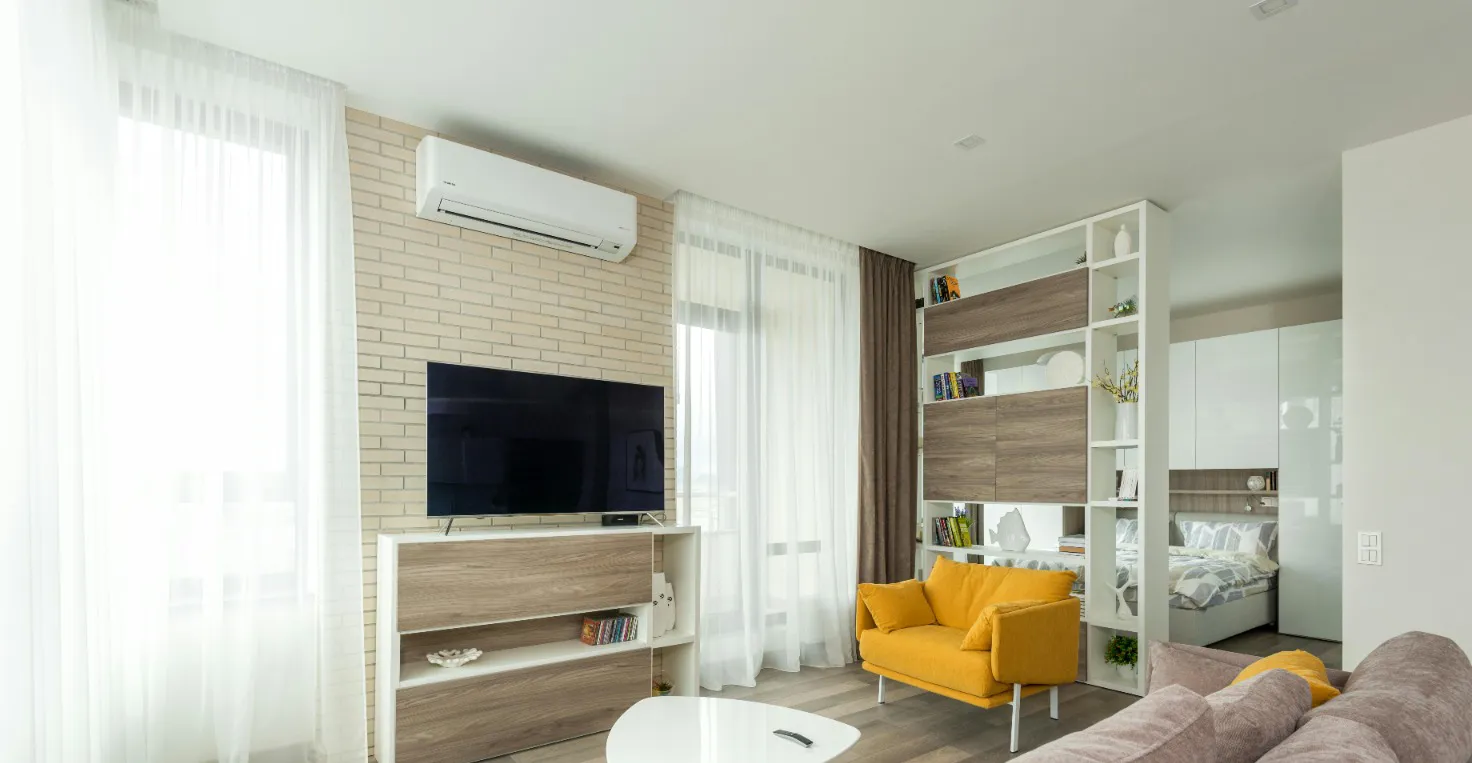
Many homeowners look at portable air conditioning first because it seems like a simple option. Portable units can be useful in some situations, but they are not the same as a properly designed fixed system.
| Option | Best for | Things to consider |
|---|---|---|
| Portable air conditioning | Temporary or occasional cooling | Can be noisy, usually needs a hose through a window, takes up floor space and may be less neat |
| Fixed air conditioning | Regular comfort in bedrooms, offices, lofts, garden rooms and living spaces | Higher upfront cost, but neater, quieter and designed for the room |
| Fixed heating and cooling system | Rooms that need year-round temperature control | Needs a survey to make sure the system is correctly sized and positioned |
If you only need occasional cooling for a short period, a portable unit may be enough. If the same room causes problems every summer, or you want a quieter and neater long-term option, fixed air conditioning may be more suitable.
Noise, appearance and disruption are some of the biggest concerns homeowners have before installing air conditioning.
Modern domestic systems are designed to run quietly, but no mechanical system is completely silent. The system, fan setting, installation quality and unit position all make a difference. This matters most in bedrooms, where the system needs to be comfortable for night-time use.
Indoor units should be positioned where they can work effectively without feeling intrusive. Outdoor unit placement also matters. Access, pipework, noise, neighbouring properties and the appearance of the home should all be considered before installation.
Installation usually involves mounting the indoor unit, positioning the outdoor unit, running pipework between the two and making the necessary electrical connections. The level of disruption depends on the system type, wall construction, access and pipework route.
Before work begins, you should understand where the units will go, how the pipework will run, how long the installation is likely to take and what disruption to expect. A good installation should be planned carefully, explained clearly and completed as neatly as possible.
In many cases, domestic air conditioning may be possible without a full planning application, provided the installation meets the relevant limits and conditions. This should not be assumed without checking, because the rules depend on the property and the proposed location of the unit.
Planning considerations can be more sensitive if your home is:
Our advice is to raise planning questions early. We can help with practical unit placement and installation considerations, but formal planning advice should come from your Local Planning Authority where needed.
Read Planning Portal guidance on domestic air conditioning and permitted development.
The cost of home air conditioning depends on the property, the system and the number of rooms involved.
A single-room installation is usually more straightforward than a multi-room system, but every home is different. A survey is the best way to get accurate advice and a clear quotation.
As a guide, home air conditioning costs are affected by:
The cheapest quote is not always the best value. A poorly sized, badly positioned or untidy system may be less comfortable, less efficient and harder to live with. With air conditioning, the quality of the survey, design and installation is just as important as the equipment itself.
Running costs depend on how often the system is used, the size of the room, the efficiency of the equipment, insulation, glazing and the temperature settings you choose.
A small bedroom used for a few hours in the evening will not have the same running cost as a large open-plan space used throughout the day. A well-insulated room will also perform differently from a room with a lot of glass or direct sun.
You can help keep running costs under control by:
Correct sizing is important. If a unit is too small, it may struggle to reach the temperature you want. If it is poorly positioned, it may not distribute air effectively. A survey helps make sure the system is specified properly for the room.
A survey helps us understand what you want the system to do and whether it is suitable for your home.
During a survey, we would usually look at:
The purpose is to recommend the right approach, not to oversell. In some homes, a single-room system may be the most practical answer. In others, it may make more sense to look at several rooms together.
After the survey, you should have clear advice on what can be installed, where it can go, what the work involves and what the cost is likely to be.
Yes, domestic air conditioning should be serviced to help keep it working efficiently, safely and reliably.
Over time, filters can become dirty, airflow can reduce and performance can drop. Regular servicing helps keep the system clean, checks that it is operating correctly and identifies minor issues before they become more serious.
Some simple maintenance, such as keeping filters clean where advised by the manufacturer, can help from day to day. Servicing and repairs should be carried out by someone qualified to work on the system.
Signs that your air conditioning may need attention include:
A good installer should take time to understand your home, explain your options clearly and recommend a system that suits the room and the property.
When comparing installers, look for:
Where refrigerants are involved, it is important that the work is carried out by suitably qualified professionals. This helps protect the system, the property and the long-term reliability of the installation.
Home air conditioning is worth considering if you have a specific comfort problem that keeps coming back. For many homeowners, that means a bedroom that is too hot at night, a loft conversion that is hard to use in summer, a home office that becomes uncomfortable, or a garden room that needs independent temperature control.
It may not be the right option for every home or every room. That is why a survey is important. The right advice should help you understand whether air conditioning is suitable, what type of system would work, where it could go and what the cost is likely to be.
Home air conditioning FAQs
It can be worth it if you have rooms that regularly become too hot, uncomfortable or difficult to use. It is usually most useful when targeted at specific rooms such as bedrooms, loft conversions, home offices, garden rooms and open-plan living spaces.
Many modern domestic air conditioning systems can provide both heating and cooling. This can be useful for rooms that are difficult to heat through the main central heating system, although air conditioning usually complements rather than replaces the main heating system.
In many cases, domestic air conditioning may be possible without a full planning application if the installation meets the relevant limits and conditions. However, this should always be checked, especially for listed buildings, conservation areas, flats, leasehold properties or sensitive outdoor unit locations.
Fixed air conditioning is usually neater, quieter and more suitable for regular use in a specific room. Portable units can be useful for occasional cooling, but they can be noisier, take up floor space and often need a hose through a window.
This depends on the system, property and number of rooms involved. A single-room installation is usually more straightforward than a multi-room or discreet system. The survey should explain the likely timescale before work begins.
Modern domestic systems are designed to run quietly, but the noise level depends on the system, settings, unit position and installation quality. For bedrooms, quiet operation and sensible unit placement are especially important.
Servicing frequency depends on the system, usage and manufacturer guidance. Regular servicing helps maintain performance, airflow, cleanliness and reliability.
The best way is to arrange a survey. This allows an engineer to check the room, layout, insulation, unit positions, pipework route, outdoor unit location and how you want to use the system.
If you are considering air conditioning for your home in Somerset, Bath, Bristol or the surrounding areas, Wilkins Plumbing & Heating can assess your property, explain your options clearly and recommend a practical heating and cooling solution.
Contact us to arrange a home air conditioning survey.
Contact us
Get In Touch

Call us on
Leave your details. We will get back to you.









Get a quote
Get in touch with one of friendly team members today!
